The Same Soul - Different Frequency
Some artists build careers. Federico Aldave compose worlds.
His sound, patient minimalism, sudden bursts of house, sweltering shadows of memory, feels like walking through a film you somehow already lived. He moves through cities and scenes with the instinct of someone who trusts the unseen: the energy of the room, the first emotional impulse, the moment when night ignites with sound.
Here, Aldave opens up about leaving Argentina with nothing but a suitcase and a Traktor, the birth of BISS, and why hope is the frequency he always returns to.
![]()
FLH: You’ve moved from Argentina to Italy, from classical piano to acid disco. What has stayed constant in your creative DNA through all those transformations? What changed?
Frederico: What never changed was the motivation to transform and express something real. I left Argentina from one day to the next, just a suitcase and a Traktor I bought with almost all my savings. That was the start of a new dream in a new place.
The sound changed, the tools changed, but the intention stayed the same: to tell a story and move people. It’s like a movie, in the beginning I was a classical pianist, then a DJ and producer. But it’s still the same character, the same story.
![]()
FLH: Your sets are described as evocative journeys. When you build a set, are you composing a story, a mood, or a memory?
F: A bit of all. Every set starts from a feeling, something I lived, or something I miss. I don’t plan too much. I follow the energy of the room and how I feel in that moment. It’s like the set is created by everyone: me, the crowd, and the space around us. That connection builds the story.
![]()
![]()
FLH: BISS by Aldave became one of Milan’s most talked-about underground movements. What does “BISS” represent to you beyond the music?
F: BISS is more than a label or a party, it’s a container for feelings. I started it to create without limits and to invite friends to do the same. No rules, no pressure. It came from a need to disconnect from the noise and reconnect with something real.
![]()
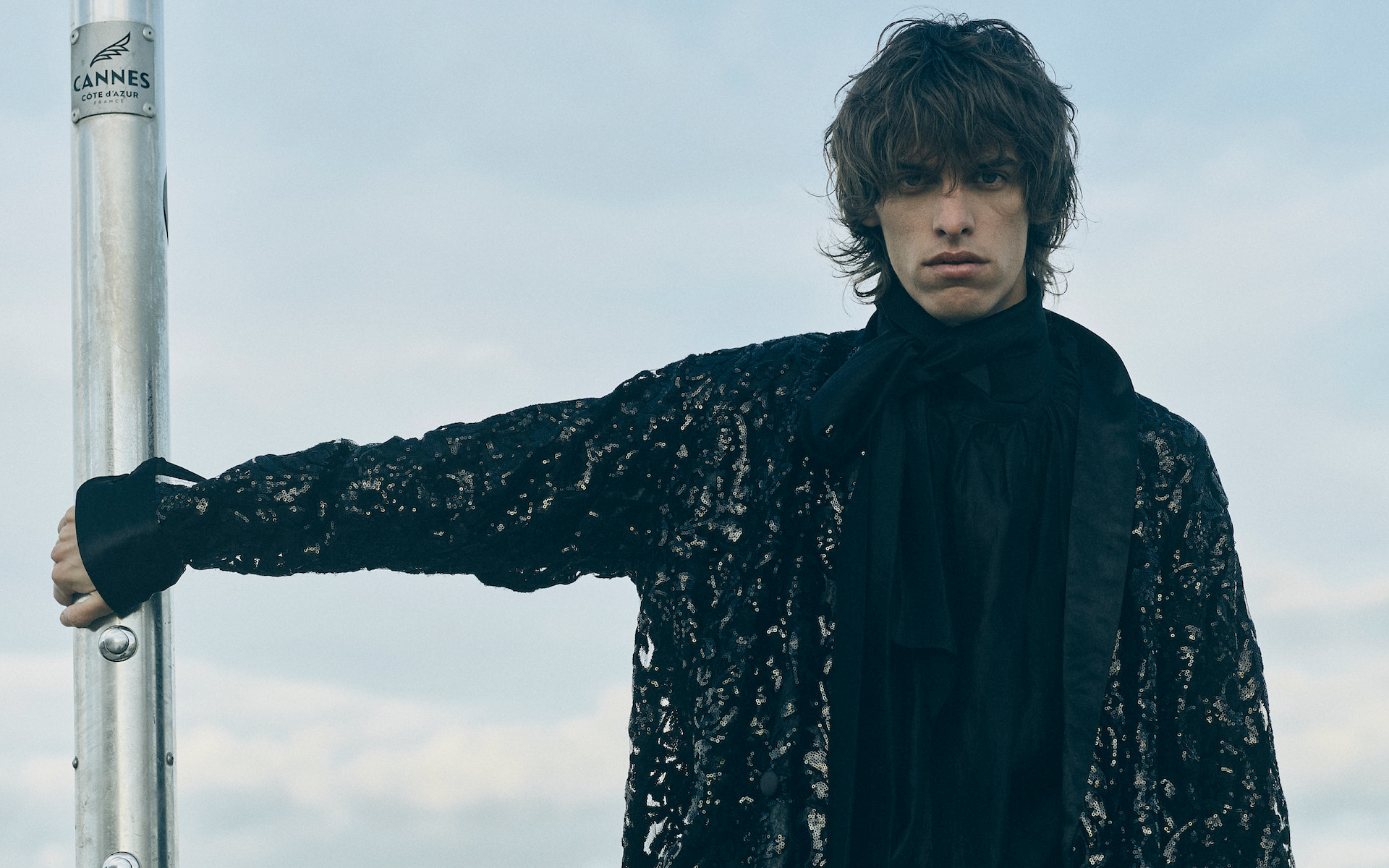
FLH: You’ve played everywhere from underground clubs in Milan to the Cannes Festival to St. Barth with Solomun. How do you adapt your sound to such different worlds, fashion, cinema, and nightlife?
F: Each place has its own energy.
In fashion, it’s about attitude and presence.
In clubs, it’s about movement, stories, and the mystery of the night, when you don’t know what will happen next.
In cinema, it’s emotion, like building a soundtrack for the moment and making people feel inside a film.
I never change who I am. It’s the same soul, just a different frequency.
![]()
![]()
FLH: Your sets are described as cinematic. Has your work as an actor influenced the way you perform as a DJ?
F: For sure. Acting taught me to trust what I feel, to stay present, and not fake it. On set, I learned that your first reaction, your real one, is the most important. When I play, I do the same. I don’t hide. I follow what I feel in the moment. That’s what makes the set honest.
FLH: House and minimal music are often described as repetitive. What’s your secret to keeping energy evolving rather than looping?
F: I think the secret is patience. Minimal gives you space, it breathes, it lets the room reset. Then house comes in with the vocals, the hi-hats, that fun movement… and everything wakes up again. That balance between breathing and pushing forward is what keeps a set alive.
![]()
FLH: You’ve created soundscapes for global brands and intimate clubs alike. What role does music play?
F: You can imagine an event in silence, but even that silence becomes the “music” of the moment. So you can imagine the power music has in shaping a brand experience or a club night. It sets the temperature of the room, the emotion, the pace. It tells people how to feel without saying a word.
![]()
FLH: The Milan underground scene is evolving fast. What defines its current energy?
F: With social media, everyone can be “cool.” Everyone can pose. So being seen doesn’t mean anything anymore. That’s why authenticity is becoming the real value. People want to feel something real, not just show it. And that’s making the underground grow fast, not only in Milan but everywhere. With BISS, I try to push that change.
![]()
FLH: You’ve shared stages with legends. How do you stay grounded?
F: Getting support from big artists gives me more hope to keep going, more strength to make music. The only way to enjoy those moments and see them as real achievements is by keeping my feet on the ground. I always remember where I come from, a humble neighborhood in Buenos Aires. My roots keep me focused.
FLH: If your music were a landscape, what would it look and feel like?
F: It would feel like a place where you don’t know exactly where you’re going, but you feel good moving forward. Free, honest, always in motion.
And visually? Autumn, that mix of rest and renewal. That shift between stillness and movement. From minimal to house, that’s the landscape of my sound.
![]()
![]()
FLH: If you were to compose a set to celebrate Faith, Love, or Hope, which would you choose?
F: I would choose Hope. Hope is movement, it’s the push. It’s what makes you stand up and keep going, even when you don’t know what’s next. Hope gives you the space to imagine new things and dare to try them.
Photography Illya Ovchar
Talent Federico Aldave
Words Johanna Engvall
Styling Martina Ghia
MUAH Marom Tal Winshenk
Graphic Design Dorota Kwiatkowska
Content Editor Magnus Swärd
Editor in Chief Sandy Kirik
READ MORE
ENDURE
NEW YEAR NEW SURPRISES
GET YOUR PRINT